


At the end of a financial year when a company earns a profit certain portion of it is retained in the business to meet future contingencies, growth prospects, etc. Owners of limited liability companies (LLCs) also have capital accounts and owner’s equity. The owners take money out of the business as a draw from their capital accounts. Owner’s equity refers to the assets minus the liabilities of the company. Owner’s equity belongs entirely to the business owner in a simple business like a sole proprietorship because this form of business has just a single owner.

Accounts Receivable
Accumulated losses can lead to negative retained earnings, where the retained earnings account shows a debit balance. This indicates that the company has sustained more losses than profits and may be in financial distress. These appropriations are often disclosed in the notes to the financial statements. Retained earnings are not an asset but a part of shareholders’ equity.
- This is often seen as a positive sign by lenders and investors, as it suggests the company is less reliant on debt financing.
- On January 2, retained earnings is zero because the company didn’t previously exist.
- The formula to calculate retained earnings encompasses those elements.
- Similar to a general partnership, a limited liability company (LLC) may have shareholders who are not responsible for the firm’s debt but are entitled to earn profit distributions.
- Demerits of Retained Earnings Because business profits fluctuate from time to time, it is an uncertain source of funds.
Are Retained Earnings An Asset Or Liability?
When a corporation withdraws money from retained earnings to give to shareholders, it is called paying dividends. The corporation first declares that dividends will be paid, at which point a debit entry is made to the retained earnings account and a credit entry is made to the dividends payable account. This balance signifies that a business has generated an aggregate profit over its life.
The Role of Retained Earnings in the Accounting Equation
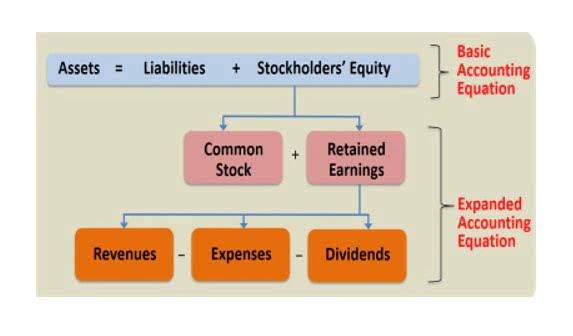
Equity, sometimes called shareholders’ equity, represents the owners’ residual stake in the business. This stake is what remains after the company’s liabilities are subtracted from its assets. The balance sheet is designed to always remain in balance, meaning that every transaction must affect at least two accounts. Retained earnings play a significant role in shaping the stockholders’ equity section of the balance sheet.
- In the long run, such initiatives may lead to better returns for company shareholders, rather than those gained from dividend payouts.
- A unique type of Expense account, Depreciation Expense, is used when purchasing Fixed Assets.
- Retained earnings are like a running tally of how much profit your company has managed to hold onto since it was founded.
- Retained earnings are calculated by taking the beginning-period retained earnings, adding the net income (or loss), and subtracting dividend payouts.
- Typically you would not change the amount recorded in your retained earnings unless you are adjusting a previous accounting error.
- In contrast, earnings are immediately available to the business owner in a sole proprietorship unless the owner elects to keep the money in the business.
How do you calculate retained earnings on a balance sheet?
If the company incurs a net loss, retained earnings decrease accordingly. The nature of retained earnings in different business structures influences how owners and managers make decisions about retained earnings is asset or liabilities reinvesting profits or distributing earnings. In corporations, retained earnings are a key indicator of financial health and growth potential. In smaller or more flexible business forms, the emphasis is often on cash flow and owner withdrawals, with retained earnings playing a less formal role. Corporations typically maintain detailed retained earnings accounts as part of their formal financial reporting. This transparency is essential because corporations often have many shareholders and regulatory requirements.
How to calculate the effect of a cash dividend on retained earnings

Retained earnings serve as a critical source of gross vs net internal financing for various business needs. Companies can allocate retained earnings to fund capital expenditures, pay down debt, support research and development, or accumulate reserves for future contingencies. Economic conditions, including inflation, interest rates, and market cycles, indirectly affect retained earnings by influencing revenue and expenses. For example, during economic downturns, companies may experience lower sales and higher costs, squeezing profits and retained earnings.
Your retained earnings account provides an ongoing count of Accounting For Architects how much money your business has been able to hold onto since it launched. As you reinvest your business or pay shareholder dividends, your retained earnings dip down. Financial statement users analyze retained earnings alongside other equity components to assess a company’s financial performance and health. A positive and growing retained earnings balance indicates profitability and reinvestment.