


It is a strong measure of the company’s success in maintaining competitive advantage and profitability within its main market sector. For instance, successfulwaiting in key markets often signals effective strategic planning and can enhance long-term growth prospects. Furthermore, understanding primary-activity expenses allows companies to make strategic decisions, such as sourcing materials more cost-effectively or optimizing labor costs.
- If an error is made in counting or calculating the cost of the ending inventory, it is likely to cause the cost of sales, gross profit and net income to be incorrect.
- Sales are reported (recognized) on the income statement when the ownership of the goods passes from the company to the customer.
- This chapter presents the different accounts you may encounter in an income statement, examples for each type of business, and the formats used in preparing this report.
- A current asset whose ending balance should report the cost of a merchandiser’s products awaiting to be sold.
- Secondary revenue and fees, on the other hand, account for the company’s involvement and expertise in managing ad hoc, non-core activities.
- From left to right, the template includes description line items, followed by a column containing the period totals for the account aggregations that comprise each line item.
- The carriage inwards is the cost incurred by a company to transport materials from the supplier to the company.
How is bad debt expense reported on the income statement?
- At the bottom of the statement, compute the net income for the company.
- The costs should be recorded in the same accounting period as the corresponding revenues in accordance with the accrual method of accounting.
- Analyzing these factors offers an understanding of a company’s comprehensive financial strategy and its ability to leverage additional financial opportunities.
- The balance sheet shows a company’s assets, liabilities, and shareholders’ equity at a particular point in time.
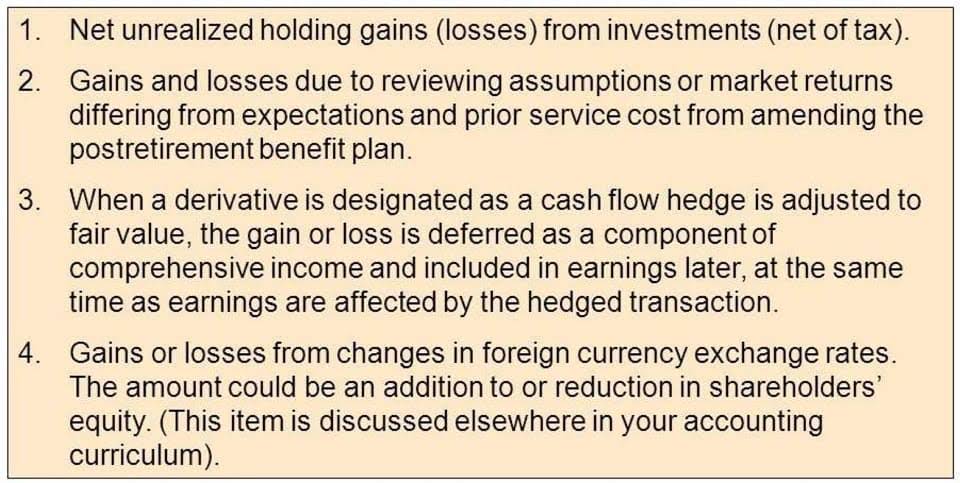
- Also, an income statement would not include unrealized gains from investments and loans (such would be reported in the cash flow statement).
- In return, the business spent money on various activities, including wages, rent, transportation, etc., leading to $14,200 in expenses.
Secondary revenue and fees, on the other hand, account for the company’s involvement and expertise in managing ad hoc, non-core activities. The income statement gives information about the financial results of Retail Accounting the business activities of a company over a given time period. The income statement shows how much revenue the company had generated over a period of time and what costs it had to incur while it was in the process of generating that income.

Main Purposes of Financial Statements (Explained)
Total revenues here are both revenues from cash sales and revenues from credit sales. Aggregate all of the revenue line items on the trial balance and insert the result into the revenue line item in the income statement. This includes not only all revenue line items, but also all revenue contra accounts, which are paired with and offset the revenue accounts. Materiality is an accounting guideline that permits the violation of another accounting guideline if the amount is insignificant. For example, a profitable company with several million dollars of sales is likely to expense immediately a $200 printer instead of depreciating the printer over its useful life.
Impact of Accounting Principles on the P&L Statement

Whereas the retained earnings statements show how much of net income or profit is being reinvested back into a company. The gross profit in the income statement is the amount of money that remains after the cost of sales has been deducted from the total revenue. Revenue and expenses on the income statement are classified as operating when it is related to the primary business operations. For example, revenue from the sale of a product, rendering of a service, or any income that is gotten from the main operation of the business would be regarded as operating revenue. The purpose of a projected income statement is to estimate your company’s financial performance for the upcoming quarter or year.
An income statement is a financial document that shows a company’s revenue, expenses, and profit over a specific period. It’s like a report card for a business’s financial performance, indicating how much money is being made and spent, ultimately revealing whether the company is making a profit or a loss. Operating Expenses are the general administrative expenses that occurred during the period to support the entity’s operating activities. Those expenses include the salary of administrative staff, including sales, admin, account, financial audit, and other staff, what accounts are found on the income statement which is not directly related to productions. Other expenses included in this line include electricity, repair and maintenance, utilities, gasoline, the bank charged, and other operating expenses. Analysts must go beyond the profit and loss statement to get a full picture of a company’s financial health.
Summary Comparison of the Three Financial Statements
Start by thoroughly checking all figures to verify that they match the financial records and calculations are correct. Look for any inconsistencies or anomalies in revenue and expense entries, ensuring nothing has been inadvertently missed or misrecorded. Secondary expenses often fluctuate based on strategic decisions, such as launching marketing campaigns or expanding office spaces.
- Once taxes are calculated and posted, they are subtracted to yield Net Income (Net Profit / Loss) – the bottom line.
- Here’s an income statement we’ve created for a hypothetical small business—Coffee Roaster Enterprises Inc., a small hobbyist coffee roastery.
- It’s important to note that there are several different types of income statements that are created for different reasons.
- You can clearly see your business’s profitability over a given reporting period.
- (The depreciation journal entry includes a debit to Depreciation Expense and a credit to Accumulated Depreciation, a contra asset account).
Gains frequently arise when a firm sells a used asset, and the proceeds obtained exceed the asset’s carrying value on the business’s records. Sales returns, allowances, and discounts, which are considered contra unearned revenue revenue, will all have negative balances. A fiscal year is an accounting year that ends on a date other than December 31.
Losses And Non-Operating Expenses
In return, the business spent money on various activities, including wages, rent, transportation, etc., leading to $14,200 in expenses. The business also gained $1,500 from the sale of an old van and incurred a $2,000 loss from a pending lawsuit. Operating revenue is realized through a business’s primary activity, such as selling its products. Non-operating revenue comes from ancillary sources such as interest income from capital held in a bank or income from renting a business property.